The way we think influences everything from how we lead to how we collaborate, yet it’s something we don’t often stop to analyze. For my MBA orientation on August 12, 2025, I was tasked with the Emergenetics assessment which breaks down thinking preferences into four areas: analytical, structural, social, and conceptual. Similar to the CliftonStrengths assessment I took earlier this year, the assessment isn’t meant to label you or put you in a box, but to ultimately better understand how you naturally process information and approach decisions. From a personal branding standpoint, this kind of self-awareness is very valuable as I step into the next chapter of my career. If we are constantly thinking about how brands are positioned in the market, it only makes sense to understand how we can position ourselves too. My results showed a strong preference for structural and social thinking, which really explains how I tend to operate both personally and professionally.
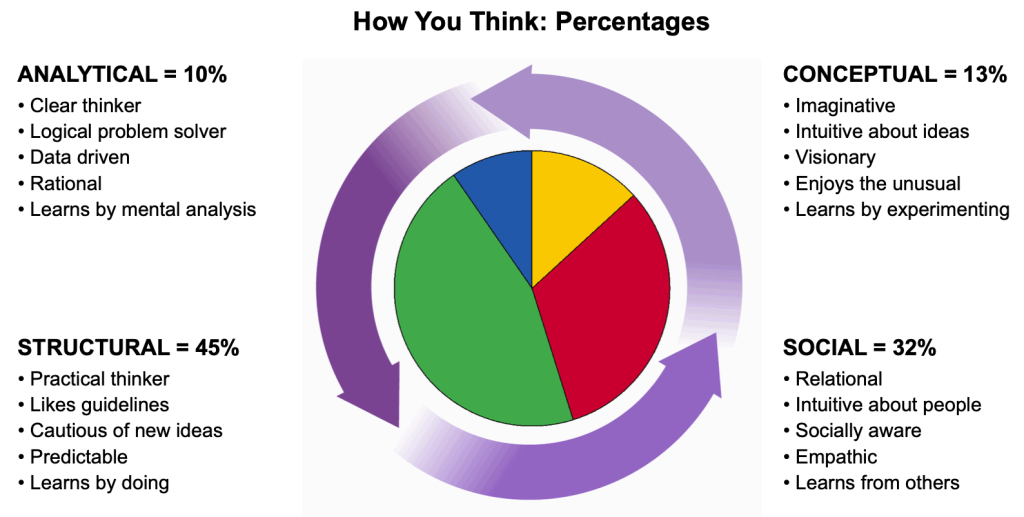
My strongest preference was structural thinking at 45%, which focuses on being practical, organized, and guided by clear processes. This result feels very on brand for me as I naturally gravitate toward structure, whether that’s creating timelines, defining expectations, or turning ideas into step by step plans. I personally feel most confident when things are clear and love bringing organization into any situation where it might be missing. In a leadership and career setting, this helps me create consistency, keep projects moving, and ensure that ideas actually get executed instead of just discussed.
My second strongest preference was social thinking at 32%, highlighting a relational and people-focused approach. While structure defines how I execute, social thinking shapes how I collaborate with those around me. In both personal and professional settings, I value relationships, communication, and understanding how others think or feel before making decisions. I also tend to learn best through conversation and teamwork rather than working in isolation by myself. In my career, my social thinking preference helps support strong client relationships, effective collaboration, and the ability to better understand audiences on an emotional level. While strategy does matter, people are ultimately what makes that strategy work and having social thinking separates me from others that don’t.
Conceptual thinking came in at 13%, which focuses on imagination and big-picture thinking. While this isn’t my dominant preference, I see it as a supporting strength to my structural and social thinking preferences. I enjoy brainstorming and thinking creatively, but prefer ideas that have more direction. Instead of using creativity for the sake of being different, I naturally lean towards ideas that are innovative but remain realistic. This balance allows me to contribute to new perspectives while still keeping the execution in mind. I don’t just enjoy generating ideas, but enjoy generating ideas that can actually be implemented.
Analytical thinking was my lowest preference at 10%, which focuses on logic and data-driven decision making. Even though it’s not dominant, this thinking preference still plays a role in how I operate. I appreciate data and insights, but don’t rely on numbers alone. Instead, I typically use information as a support mechanism rather than the starting point. This helps me avoid overanalyzing while still making informed decisions, resulting in data informing my thinking but not defining it.
Beyond thinking preferences, Emergenetics also looks at personal behavioral tendencies. My results showed that I lean slightly more reserved in expressiveness, meaning I tend to communicate in a more thoughtful and calm way rather than being overly outgoing. My assertiveness landed in the middle of easygoing and competitive, which reflects a balanced approach where I value collaboration but can still step in and take direction when needed. My flexibility rated the lowest, falling between focused and firm, suggesting that I prefer clarity, consistency, and defined expectations over constant change. Together, these results reinforce my structural mindset and explain why I perform best in environments with clear direction. As a leader, this translates into my characteristics of being organized, dependable, and focused on bringing stability into any teams I work with.
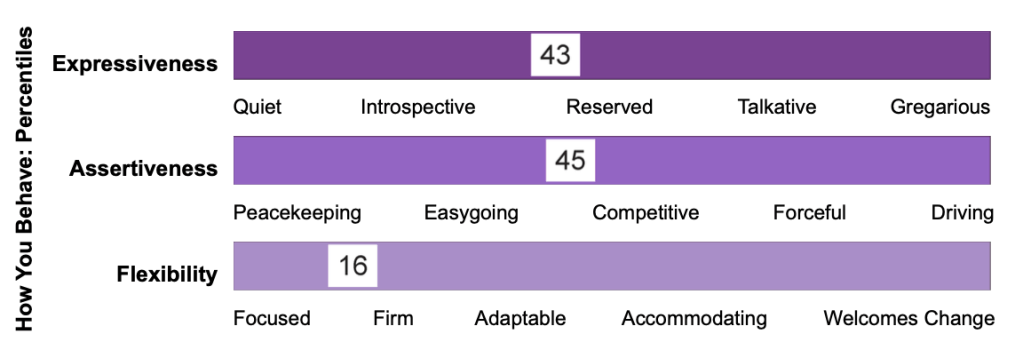
Looking at my Emergenetics profile as a whole, the results feel less like personality traits and more like a blueprint into how I think. Structural thinking shapes how I execute, social thinking shapes how I lead, conceptual thinking shapes how I innovate, and analytical thinking supports how I validate decisions. Putting these all together, these preferences influence how I collaborate, approach strategy, and show up in personal, academic, and professional settings. Understanding how you think doesn’t just provide insight, it provides direction. The more aware you can be of how you process ideas, collaborate, and make decisions, the more intentional you can show up as a leader. Tools like Emergenetics don’t define who you are, but they offer clarity that makes it easier to lean into your strengths, communicate effectively, and grow with a purpose.
What thinking preference do you think you lean toward most?
Take the Emergenetics assessment to uncover your thinking style and start analyzing yourself with the same curiosity you bring to brands.

 Through a Marketing Lens — by Katie Windfeldt
Leave a comment