I have always had an eye for interior design, so blending that passion with my marketing lens made it impossible not to notice the impeccable essence of the Fontainebleau hotel in Las Vegas. Walking through the space this past weekend, it was clear that every detail was intentional and deeply rooted in brand identity. Designed by David Collins Studio, the hotel pays homage to Morris Lapidus, the “Master of MiMo,” also known as “Miami Modernism,” who redefined leisure architecture through theatrical, curved, and extravagant designs. What stood out to me the most was how seamlessly the hotel blends that historical influence with a modern luxury aesthetic. It’s not only visually beautiful but it’s also strategically branded, and that level of intention earned the hotel a MICHELIN One Key in 2025, highlighting its commitment to exceptional hospitality and overall guest experience.
Take a look at some of the details that immediately caught my eye:
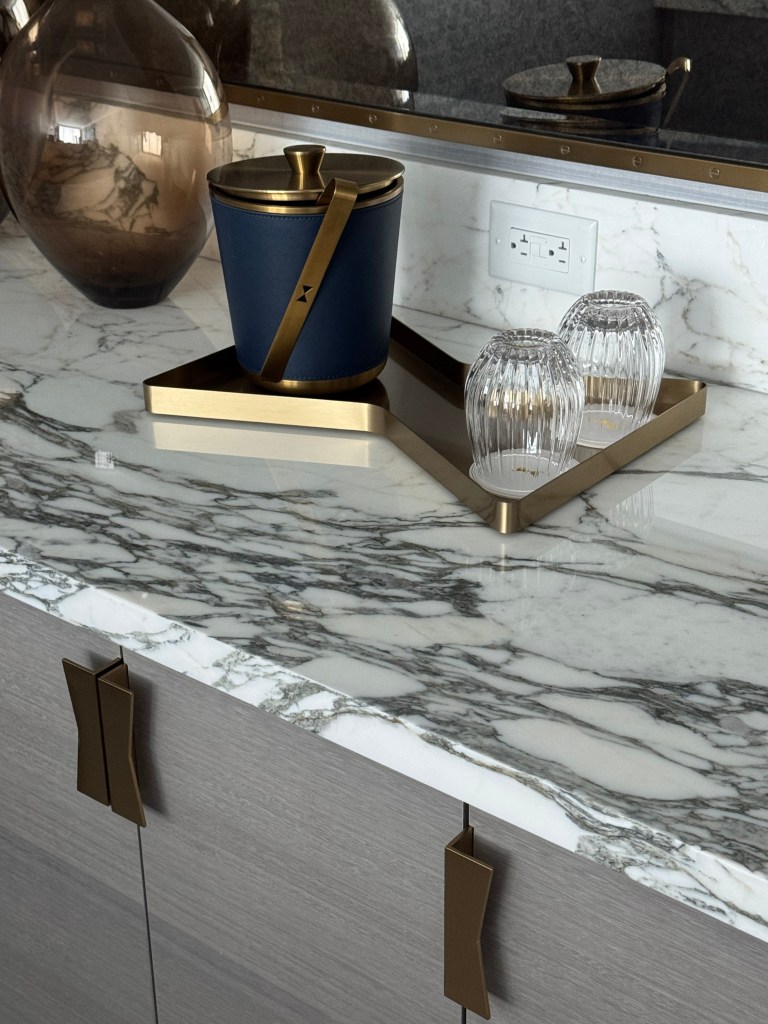
Guest suite decor – Katie Windfeldt 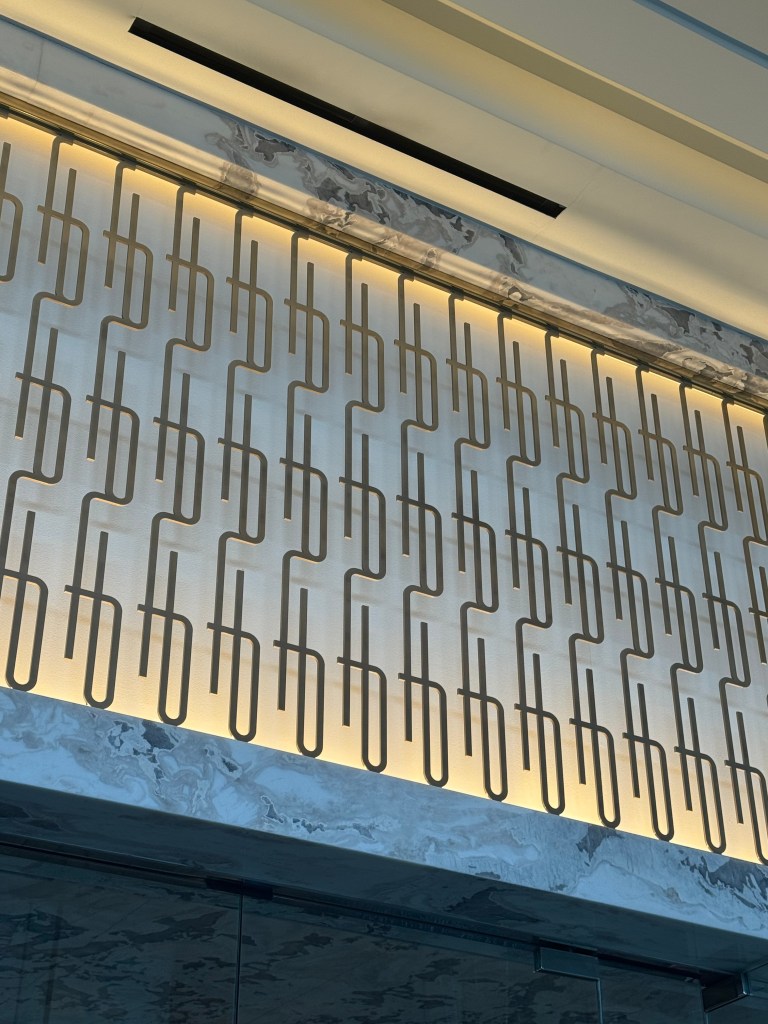
FB motifs above entry way – Katie Windfeldt 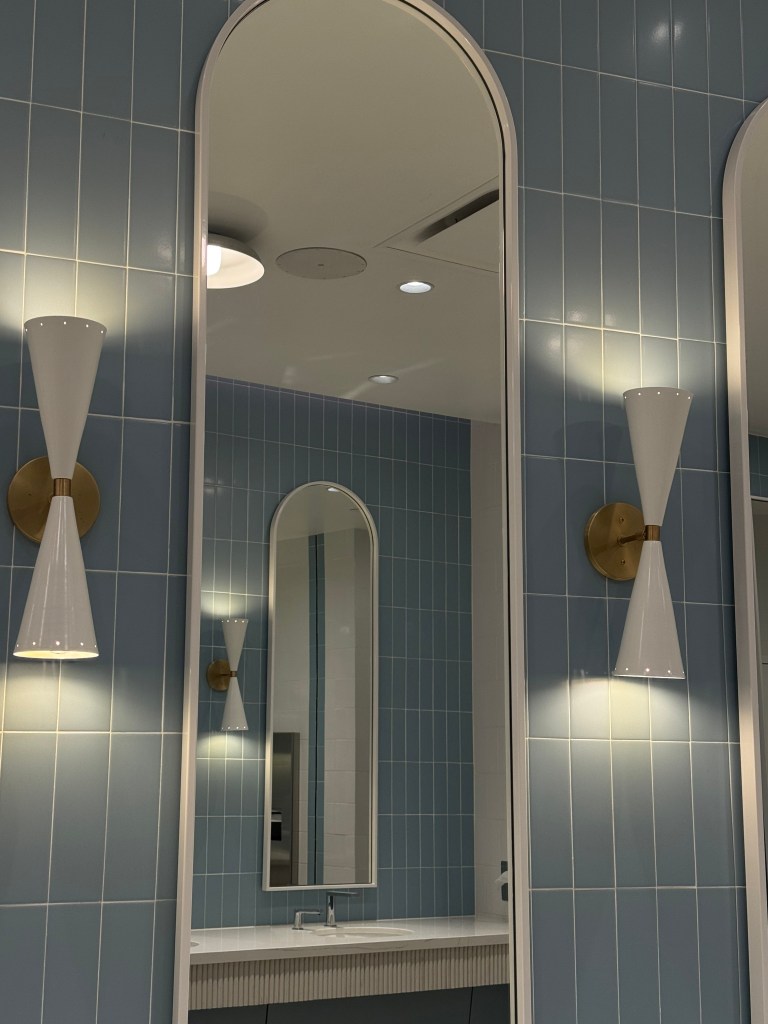
Bathroom design – Katie Windfeldt 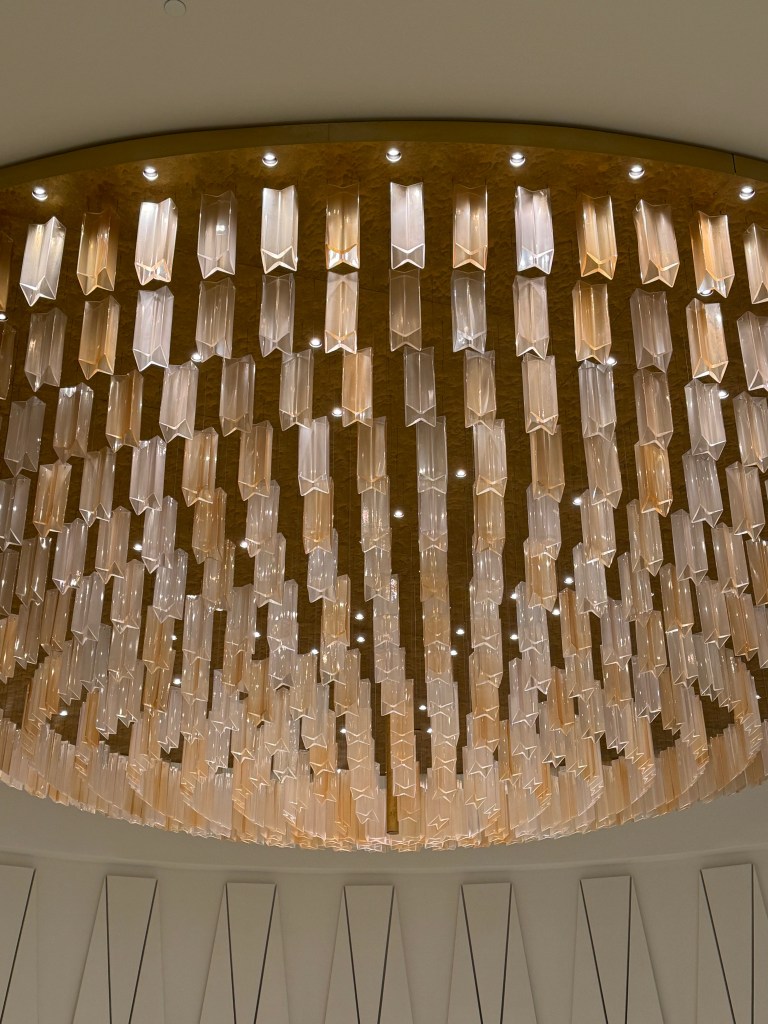
Bowtie chandelier – Katie Windfeldt 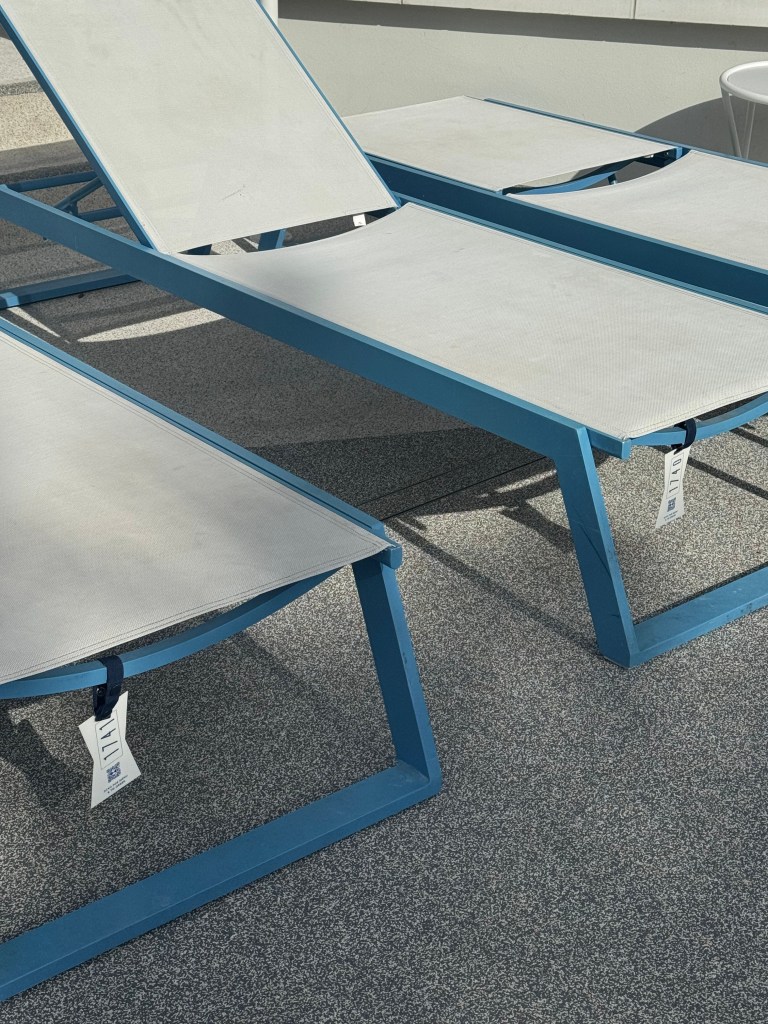
Bowtie menu tags on pool loungers – Katie Windfeldt 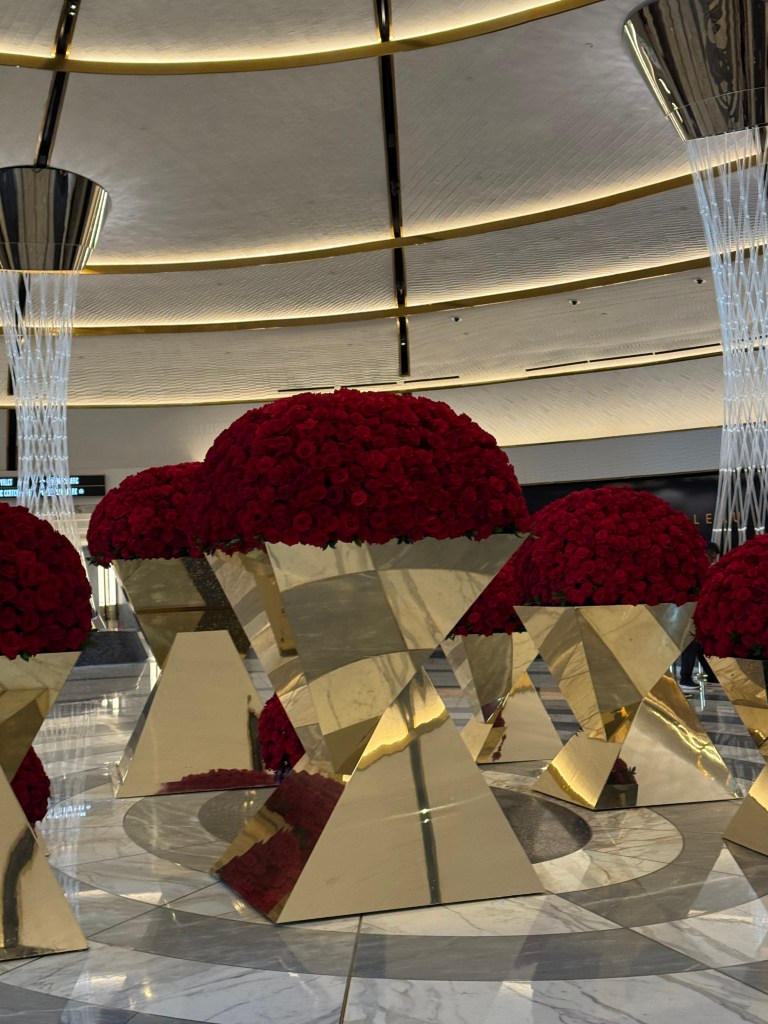
Grand entry feature – Katie Windfeldt 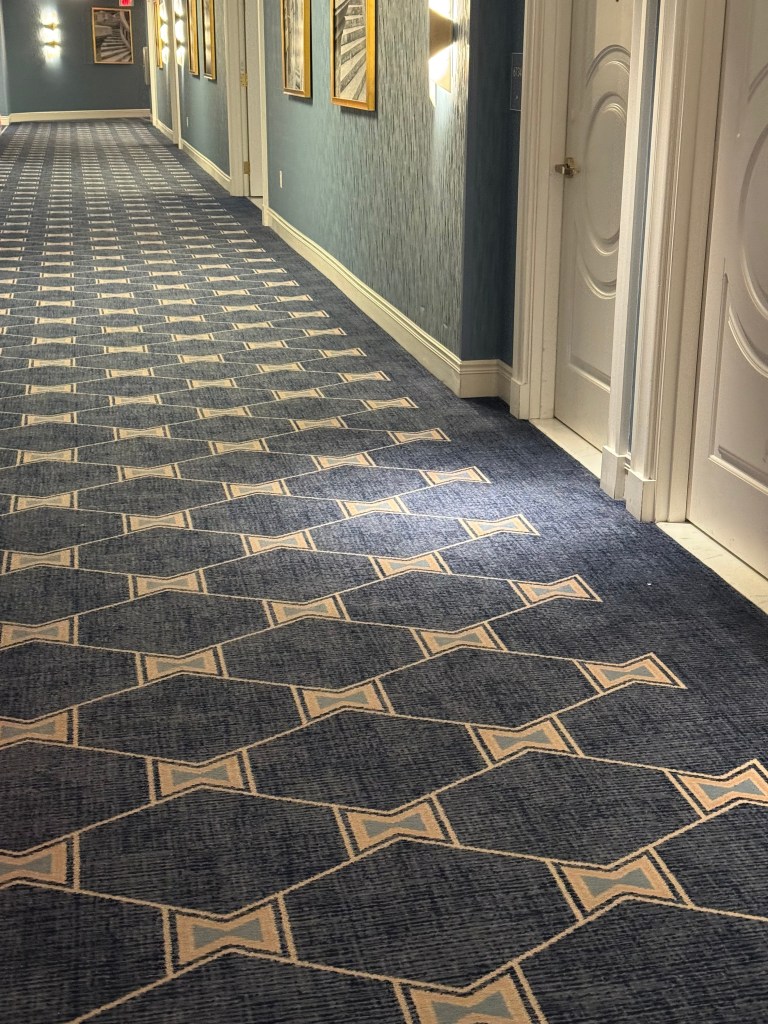
Corridor carpet – Katie Windfeldt 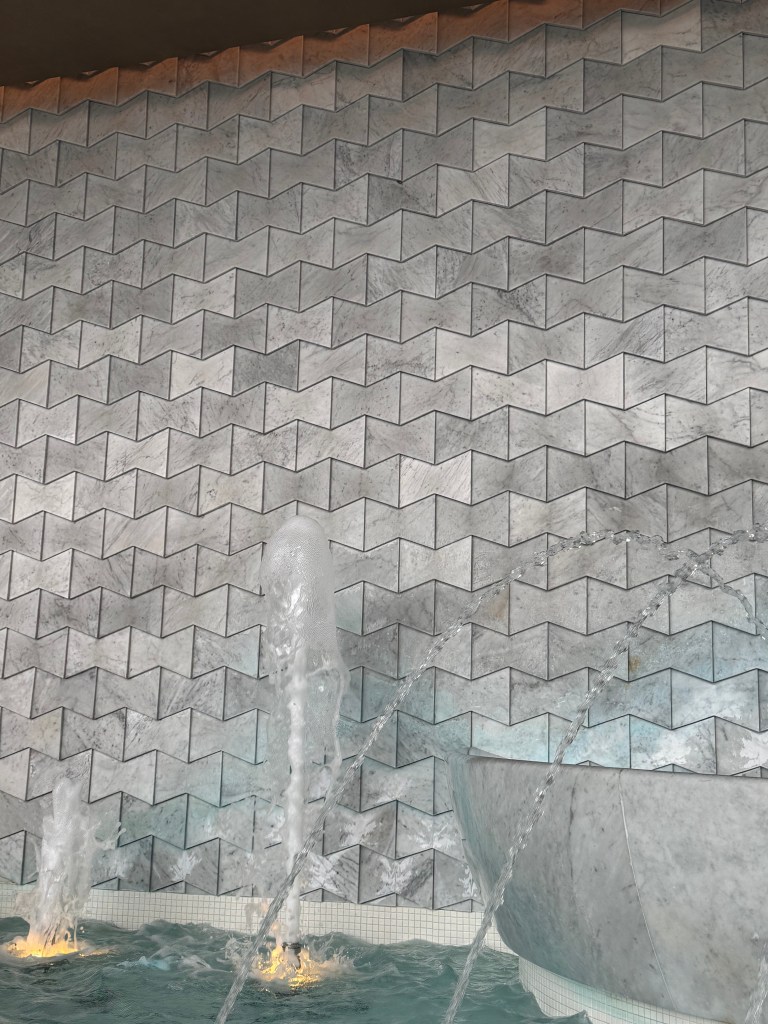
Waterfall backsplash – Katie Windfeldt 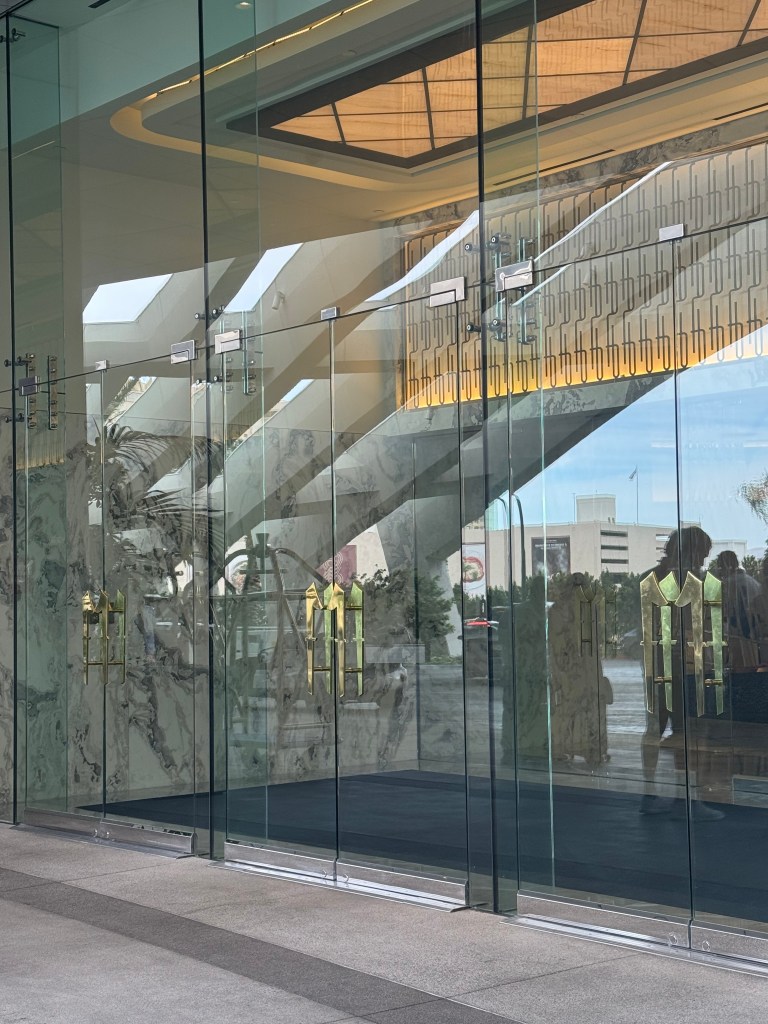
“F” entry door pull handles – Katie Windfeldt 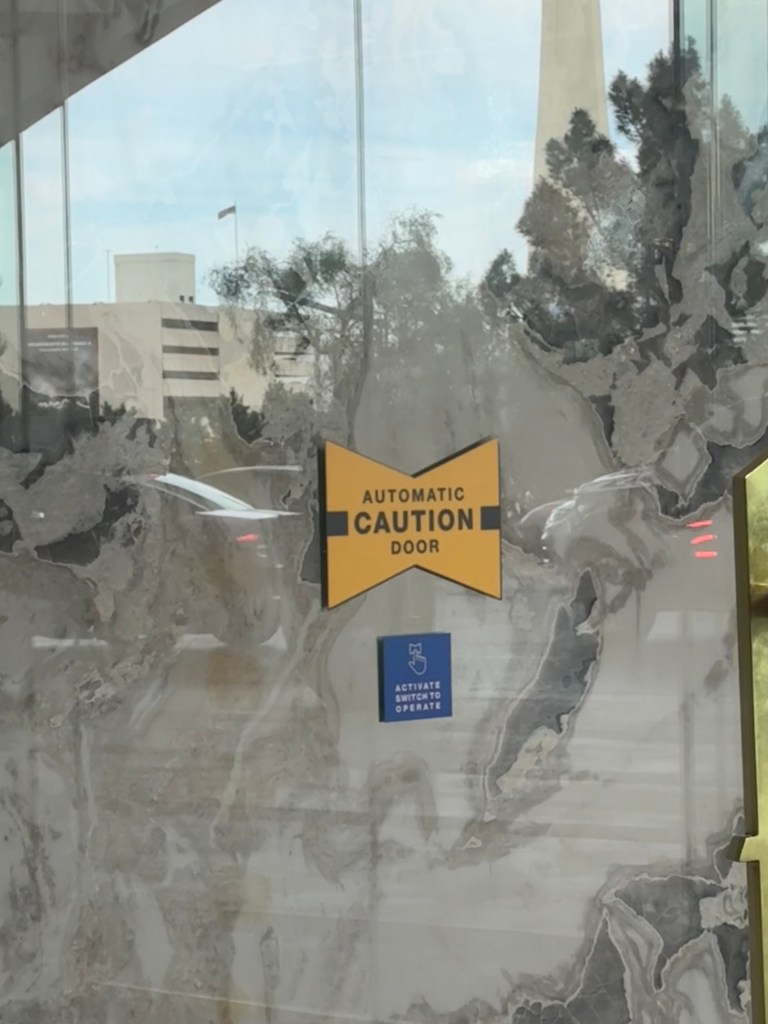
Bowtie caution signs on doors – Katie Windfeldt
What makes this experience so different from a typical hotel stay is how embedded the design feels within the brand itself. Many hotels rely on a cohesive color palette or elevated decor but Fontainebleau Las Vegas takes it a step further by making design a true storytelling tool. From the repeated bowtie motif inspired by Lapidus’ love for wearing them to the dramatic curves and finishes, every element reinforces the feeling of exclusivity, elegance, and intention. As a guest, you don’t just see the brand, you can actually feel it. That level of consistency creates an immersive and more memorable consumer experience, which is exactly what strong branding aims to achieve.
From a marketing perspective, this is where design can become one of the most powerful first impressions a brand can make on a consumer. Before any service interaction even happens, the environment is already communicating value, positioning, and emotion. Fontainebleau Las Vegas uses its interior design to immediately signal premium positioning while building an emotional connection with their guests at the same time. It sets the expectations for the level of service, quality, and experience consumers can anticipate throughout their stay. Ultimately, this shows that when design is done right, it isn’t just aesthetic, it’s a strategic tool that shapes perception, influences behavior, and elevates the entire brand experience. If you haven’t seen the incredible work of David Collins Studio, here’s your sign to book your next stay at Fontainebleau Las Vegas!
Have you ever noticed how much design impacts your perception of a brand? If so, where?!

 Through a Marketing Lens — by Katie Windfeldt
Leave a comment